From Hurricanes to Home Runs: A Florida Father’s DIY Batting Dome
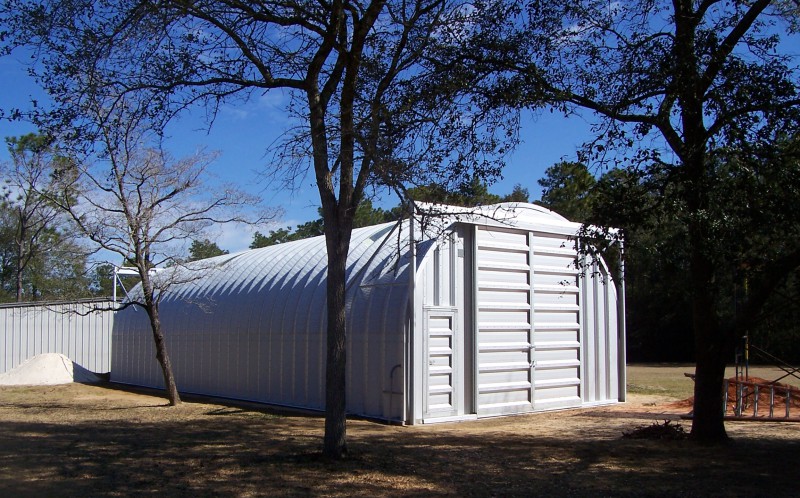
For Frank Hodges, a father in Florida, the weather was the primary opponent to his daughters’ softball dreams. Between the relentless tropical sun, sudden afternoon downpours, and the seasonal threat of hurricanes, finding a consistent place for his 8 and 9-year-old daughters to practice was a constant struggle.
Frank didn’t just want a cage: he wanted a hurricane-resiliant sanctuary. To make it happen, he realized he would have to build it himself.
Learning from the Past: Why the Airplane Hangar Failed
Frank’s first attempt at a DIY dome involved repurposing an old airplane hangar. While it worked for a while, it wasn’t designed for the demands of the sport or the intensity of Florida’s climate.
By 2019, Hodges faced a decision: invest in constant repairs for an inadequate structure, or start over with purpose-built engineering.
“I decided it was time to go ahead and tear it down, and I started researching on the Internet how I could get a building with the height I needed it to be that could also withstand any hurricanes that hit our area,” Frank explains. He needed a structure that could offer massive interior height without sacrificing structural integrity.
The Search for a Hurricane-Rated Solution
Hodges began researching with specific, non-negotiable requirements:
- Sufficient height: Minimum 40 feet to accommodate full batting trajectories and pitching arcs
- Hurricane resistance: Able to withstand Category 3+ wind speeds common in Florida
- Affordability: Reasonable cost without sacrificing structural integrity
- Florida Durability: Naturally protects against the Florida pest population
- Owner-builder friendly: Assembly is possible without hiring professional construction crews
“I decided it was time to go ahead and tear it down, and I started researching on the Internet how I could get a building with the height I needed it to be that could also withstand any hurricanes that hit our area,” Hodges explains.
The combination proved harder to find than expected. Most companies offered buildings that met one or two criteria but failed on others.
Frank’s research led him to SteelMaster, where he found a unique combination of “owner-builder” accessibility and high-level engineering.
“That was the real selling point with SteelMaster: the fact that I could put it up myself,” Frank says. He didn’t want to spend a fortune on a professional construction crew, but he also refused to compromise on the dimensions required for professional-grade practice.
To get the size exactly right, he worked closely with the design team: “I talked back and forth with a representative from SteelMaster in terms of the width and length I wanted, and he worked it out so that we got the height that we needed.”
The Build: Three Saturdays to Success
Because SteelMaster buildings arrive as a “kit” of pre-punched, precision-engineered panels, the assembly moved at a record pace. Frank and a few friends were able to erect the main structure in just three Saturdays in December.
| Phase | Timeline | Action |
| Preparation | November | Planning and laying the foundation |
| Main Assembly | December | Construction with Frank and a few friends |
| Interior Finish | January | Electrical and equipment installation |
| “Grand Opening” | January | Celebrate with the girls and their Teammates |
Even when challenges arose, Frank wasn’t alone. “If I ran into a speed bump, it was as simple as a telephone call or email to their technical support, and I had the answer right away,” he says. This support turned potential obstacles into minor delays, allowing the project to stay on track for a January opening.
More Than Just a Practice Facility
The completed 40-foot-tall dome has transformed the way the Hodges family experiences the sport. The structure offers 100% usable interior space with no support columns, meaning every square foot is functional for:
- Full-Arc Pitching: The height allows for regulation pitching and high-trajectory batting.
- Agility Drills: No pillars means no safety hazards during high-speed conditioning.
- Weight Training & Practice Stations: There’s enough room for additional weight training equipment and smaller practice stations.
Community Impact Beyond the Family
While Hodges initially built the facility for his two daughters, its impact quickly expanded beyond family practice sessions. The team began gathering at the dome several times weekly, transforming it from a private training space into a community athletic resource.
This evolution reflects a broader truth about quality training facilities: they naturally become hubs that benefit entire teams and programs. Parents no longer scramble to find indoor space when weather threatens. Practice schedules become reliable rather than weather-dependent. Skills develop consistently rather than sporadically.
A Legacy of Quality Time
Beyond the statistics and wind-load ratings, the dome represents an investment in family. Frank’s pride in the project is clear: “I am just extremely happy with it. The building looks good, and more importantly, it’s a wonderful place for my daughters and me to spend quality time together.”
In a state where the weather can change in an instant, the Hodges family now has a permanent, hurricane-proof home for their softball dreams. Whether it’s a scorching July afternoon or a rainy November morning, the practice never has to stop.
Categories
Tags
Related articles
Exploring A Stunning Prefab Pool House in Joshua Tree
The Stories Behind the 2025 SteelMaster Buildings Calendar
Customer’s Dream Home Design Comes to Life In Arizona
Quonset Hut Makes for an Unforgettable Wedding and Event Venue
3 Ways to Transform Your Quonset Using Medieval Interior Design
Man Uses Quonset Roof to Restore Abandoned Building

SteelMaster on the Big Screen in Top Gun: Maverick
Father & Sons Build Quonset Hut with Solar Panels
Building a Roll Off Roof Observatory Using a Quonset Hut